Being an Effective Advocate for Your Aging Parent
What this article will help you do:
• Understand what advocacy looks like when supporting an aging parent
• Learn the core skills and conversations needed to protect their wishes
• Navigate medical, legal, and family systems with more confidence
• Strengthen your leadership role without burning out
• Identify next steps to get the support you need

Advocacy Is the New Reality of Modern Caregiving
If you’re a professional woman balancing work, family, and the increasing needs of an aging parent, you’re doing far more than “helping out.”
You’re advocating.
That means translating medical information, coordinating care, asking the questions no one else is asking, and making decisions in real time—often with limited clarity and high stakes. Advocacy is not simply a task. It’s a role. And most women enter it without preparation, guidance, or structure.
This article offers a grounded, practical roadmap for becoming a more confident, effective advocate. Whether you are dealing with complex medical decisions, navigating dementia, or trying to protect your parent’s dignity and safety while holding onto your own well-being, this will help you lead with clarity rather than reaction.
Why Adult Children Must Become Advocates
The modern eldercare landscape is fragmented, fast-moving, and emotionally charged. You’re often the only constant in your parent’s care, especially when:
Hospital staff change every shift
Doctors communicate inconsistently
Your parent forgets or can’t articulate symptoms
Siblings have different opinions or avoid involved conversations
You’re managing everything around a demanding job
Your advocacy becomes the bridge between what your parent wants and what our senior care systems deliver.
Advocacy is not about taking control. It’s about ensuring your parent’s wishes are honored and their dignity is protected.
But to do that, you need clarity, structure, and confidence, not guesswork.
Step 1: Build the Foundation of Advocacy Based On Their Values, Not Your Assumptions
Most adult children make early-care decisions based on assumptions.
“My dad would never want that.”
“My mom definitely wants to stay at home.”
But assumptions collapse under pressure. Effective advocacy begins with explicit clarity.
Here are three foundational conversations to have, ideally before a crisis:
1. What matters most as they age?
Ask questions such as:
“What does quality of life look like for you now?”
“What scares you the most about getting older?”
“If your health changed, what would you want us to prioritize?”
2. How do they feel about medical interventions?
Explore preferences around:
Hospitalizations
CPR and resuscitation
Feeding tubes and ventilators
Comfort-focused vs. life-prolonging treatment
Staying home vs. skilled nursing if care needs increase
3. Who do they trust to make decisions?
You need to know:
Who they want as their medical decision-maker
Who manages finances if they can’t
Where documents are stored
Whether anything is outdated or incomplete
Step 2: Get the Tools That Give Your Advocacy Authority
You can’t advocate effectively without tools that give you legal and medical footing. While you’re not providing legal advice, you do need to understand the landscape.
Your parent may need:
Durable Healthcare Power of Attorney
Durable Financial Power of Attorney
Advance Directive or Living Will
HIPAA release to access medical information
Physician Orders for Life-Sustaining Treatment (name varies by state)
Why this matters:
Without these documents, you may be legally blocked from speaking on your parent’s behalf, even in an emergency.
If dementia is emerging, time is even more critical. Once cognitive capacity declines, options narrow and the process becomes more complex.
Now is the time to ask: “What documents exist, what’s missing, and who needs copies?”
Step 3: Become Systematic - Organized Information Makes You Powerful
Advocacy fails when details slip through the cracks.Doctors change. Symptoms fluctuate. Medications get added or removed. A simple, organized system gives you authority, credibility, and peace of mind.
Create a single place—digital or physical—that includes:
Current medication list
Diagnoses and medical history
Names of all providers and specialists
Copies of legal documents
A log of symptoms, changes, or concerns
A list of upcoming appointments and follow-ups
Keep it simple - a notes app, folder, shared Google doc, or dedicated binder works.
Organization is about making sure nothing gets missed when you or others are under pressure.
Step 4: Know How to Communicate in Medical Settings
Healthcare environments can feel rushed, intimidating, and full of clinical jargon. But the right communication habits put you in control.
Use these strategies:
Lead with concise, specific information. Instead of “Mom is off lately,” say: “Mom has been increasingly confused after 6 pm and had two falls in the past month.”
Ask clarifying questions. “What are the risks of doing nothing?” “What decision would you make if this were your parent?”
Confirm next steps out loud. “So we’re increasing the medication and scheduling a follow-up in two weeks. Correct?”
Document everything. Notes protect you, help you remember details, and allow you to advocate across shifts and departments.
Bring the conversation back to your parent’s values. “Given her priority to stay comfortable at home, is this intervention aligned with that goal?” Advocacy means steering the conversation—not just absorbing it.
Step 5: When Dementia Is Part of the Journey
Advocacy changes dramatically when dementia is involved. Your parent may not remember conversations, understand risks, or communicate preferences clearly.
This requires a shift:
Use substituted judgment. Ask: “What would my parent choose if they were fully able to express themselves?”
Prioritize safety without stripping dignity. Sometimes you must intervene, gently but firmly, when safety is compromised.
Revisit care plans regularly. Dementia care evolves. What worked last month may not work today.
Recognize when it’s time for more support. In dementia care, waiting “until it gets really bad” usually makes everything harder—for you and your parent.
Helpful Tool: Advocacy Checklist
Use this as a snapshot to assess where you stand:
I know my parent’s core values and care priorities
I know what legal documents exist and who is named
I have a simple system for tracking medical information
I understand my parent’s preferences for hospitalization or end-of-life care
I know where documents are stored and who has copies
I’ve identified where I likely need professional help
Support Options for Your Advocacy Journey
You don’t have to navigate this alone! Living Goldenwell exists because women like you deserve clarity, structure, and strategic support, not guesswork!
Here’s where to begin:
1. Watch the Free Masterclass
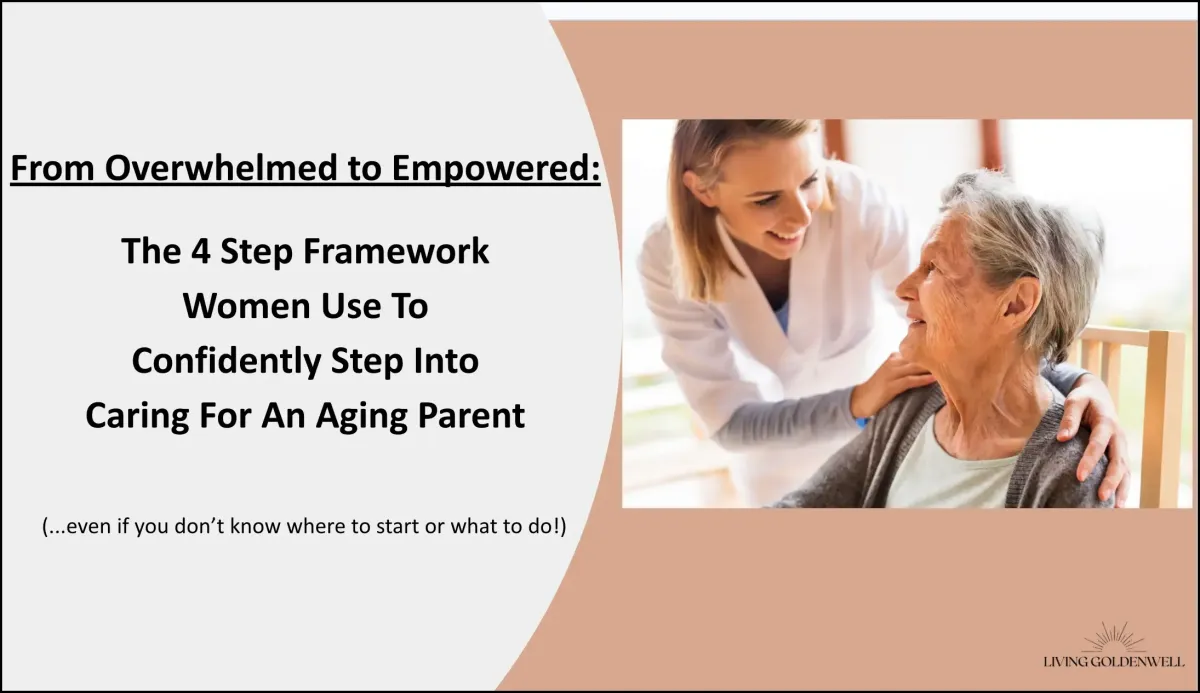
Learn the four shifts that move you from overwhelmed to empowered elder caregiving.
https://livinggoldenwell.com/masterclass
2. Book a Call with Kathleen
Get personalized insight and guidance for your family's caregiving situation.
https://livinggoldenwell.com/contact
3. Join Our Community
Connect with other professional women navigating aging parent care.