Dealing With a Dementia Diagnosis: What To Do Next
Practical Guidance for Adult Children Supporting an Aging Parent
A dementia diagnosis is life changing. Even if you suspected something was off — missed appointments, memory lapses, mood shifts — hearing it confirmed by a clinician hits differently. Suddenly you’re managing uncertainty, decision-making, and worry all at once.
And if you’re the adult child who usually “figures everything out,” this moment might feel like both a responsibility and a reckoning. You didn’t choose this role, but now you’re the one holding the questions, the uncertainty, and the next steps.
There is a path forward, and it begins with clarity, not panic.

What We’ll Cover:
This guide outlines the strategic actions to take in the first few weeks after a dementia diagnosis so you can support your parent with confidence and protect your own wellbeing along the way.
You’ll learn how to:
Clarify the medical picture and understand what the diagnosis actually means
Build a realistic care team so the responsibility doesn’t fall only on you
Protect your time, health, and career while caregiving
Complete essential legal and financial steps before capacity declines
Make home life safer over the next 6–12 months
Create a simple one-page dementia care plan that keeps everyone aligned
Step 1: Clarify the Medical Picture
A diagnosis is only the beginning. What you need next is definition — a shared understanding of what your parent is facing and what comes next.
Schedule a follow-up appointment focused on:
The specific type of dementia (Alzheimer’s, Lewy body, vascular, etc.)
The estimated stage and expected symptoms
Short-term care goals for the next 6–12 months
The purpose of each medication
Red-flag symptoms that require urgent care
Ask for a written summary. You’ll use it to align siblings, support care decisions, and advocate for your parent as needs evolve.
Step 2: Build Your Support Structure
Dementia care is not a solo assignment. The sooner you build a support structure around your parent, the more sustainable this becomes.
Your Parent’s Medical Team
Primary care clinician
Neurologist or geriatric specialist
Nurse or care coordinator
Social worker
Therapist or counselor
Your Family & Informal Care Team
This includes you, siblings, spouse/partner, and trusted friends or church members.
Assign roles early:
Who tracks appointments?
Who manages meds?
Who checks in daily or weekly?
Clear roles prevent burnout and resentment.
Your Community Support Team
Dementia education classes
Support and community groups
Adult day programs
Respite caregivers
Geriatric care managers
Step 3: Protect Your Time, Health, and Work
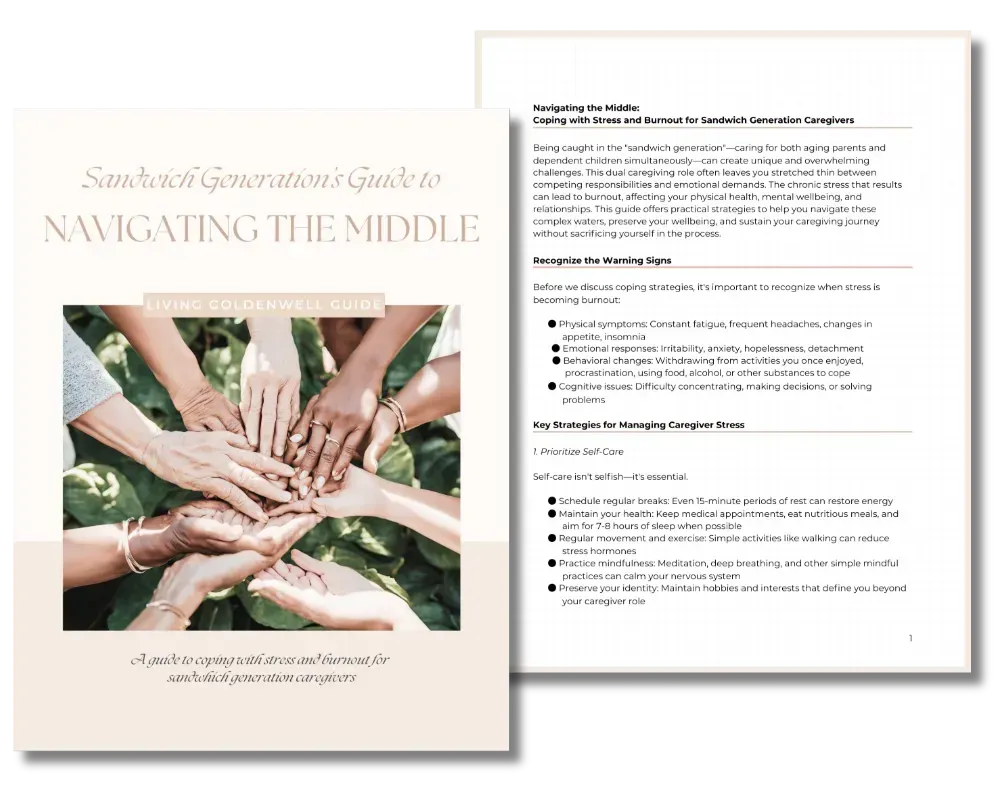
Dementia caregiving often starts small and grows quickly. Without boundaries, it can quietly consume your time and energy.
Strategic moves that help:
Review your workplace benefits (leave options, flexibility, EAP services)
Block elder caregiving commitments on your calendar the same way you do meetings
Have a proactive conversation with your manager about long-term planning
Protect deep-work windows so your performance remains strong
Set realistic expectations with your family
Supporting your parent is about designing a sustainable rhythm for both of you without sacrificing your future.
Step 4: Complete Essential Legal and Financial Documents
Dementia compresses the decision-making timeline. The earlier your parent participates in legal and financial planning, the more empowered and protected they remain.
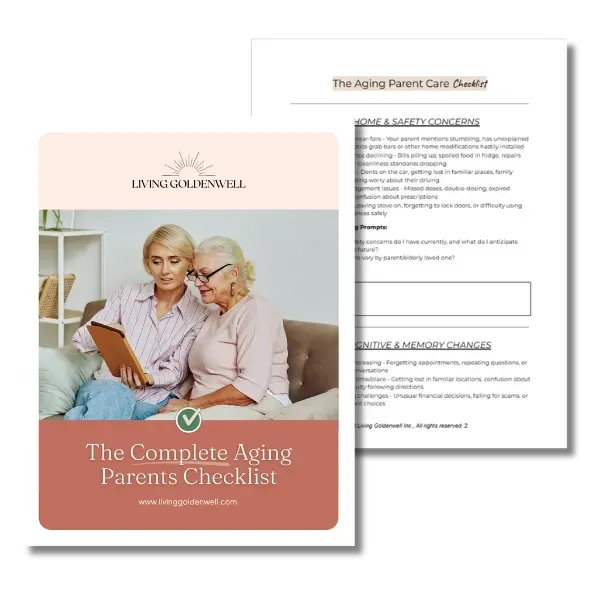
Complete or update:
Healthcare Power of Attorney
Financial Power of Attorney
Advance Directive / Living Will
Updated will and beneficiary designations
HIPAA authorizations
Meet with an elder law attorney to understand long-term care options, Medicaid planning, and how to safeguard your parent’s assets and wishes. This is about honoring who your parent is, and preparing for what they may not be able to express later.
Step 5: Make Home Life Safer and More Supportive
Early-stage dementia often shows up through subtle safety risks. Designing the home for the next 6–12 months (not just today) helps prevent emergencies.
Focus on three areas:
1. Home Safety
Improve lighting
Remove clutter
Simplify medication storage
Adjust kitchen safety
2. Driving
Driving ability often declines before families recognize the risk. Discuss expectations with the clinician and create a transition plan together.
3. Wandering Risk
Ensure your parent carries ID
Use location sharing or GPS devices
Make neighbors or nearby friends aware
Step 6: Create a One-Page Dementia Care Plan
This simple tool becomes your anchor as responsibilities grow.
Include:
Diagnosis and approximate stage
Medication list and purpose
Medical team and contact information
Red-flag symptoms
Weekly care responsibilities
“What Helps / What Makes Things Worse” — your parent’s routines and preferences
Share this with siblings, your spouse/partner, clinicians, or anyone who steps in to help. Alignment reduces drama, confusion, and duplicated work.
Q&A: Common Questions After a Dementia Diagnosis
“Are we planning too far ahead?”
No. Planning early reduces emergencies later. It’s protective, not pessimistic.
“How do I get my siblings to step up?”
Share the one-page care plan and assign specific, concrete tasks.
“How do I know when to consider in-home help or memory care?”
Look for safety concerns, caregiver exhaustion, or unmet medical needs. These decisions become clearer when your plan and observations are documented over time.
You Don’t Have To Do This Alone
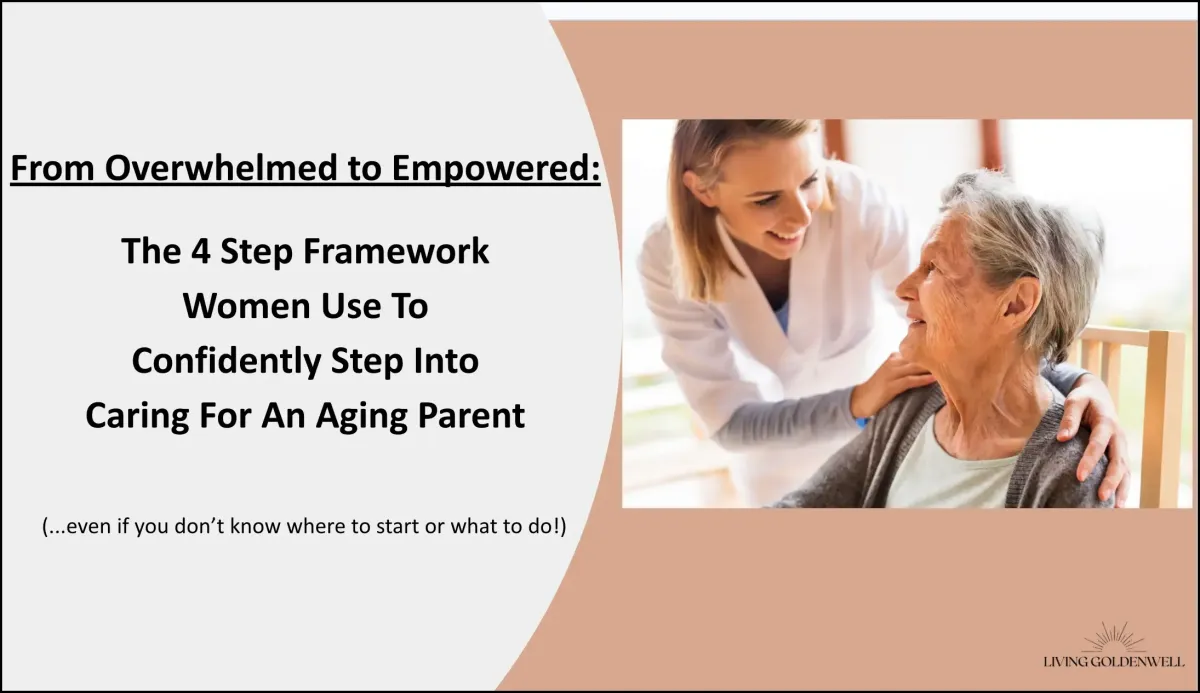
Take the next step toward clarity and confidence in navigating helping a parent with dementia. Together, we can help you support your parent with dignity, get guidance and resources, and preserve your own wellbeing along the way.
Join our community for women supporting aging parents (including those with dementia): https://livinggoldenwell.com/community
Watch our free masterclass: https://livinggoldenwell.com/masterclass
Book a call with Kathleen: https://livinggoldenwell.com/contact